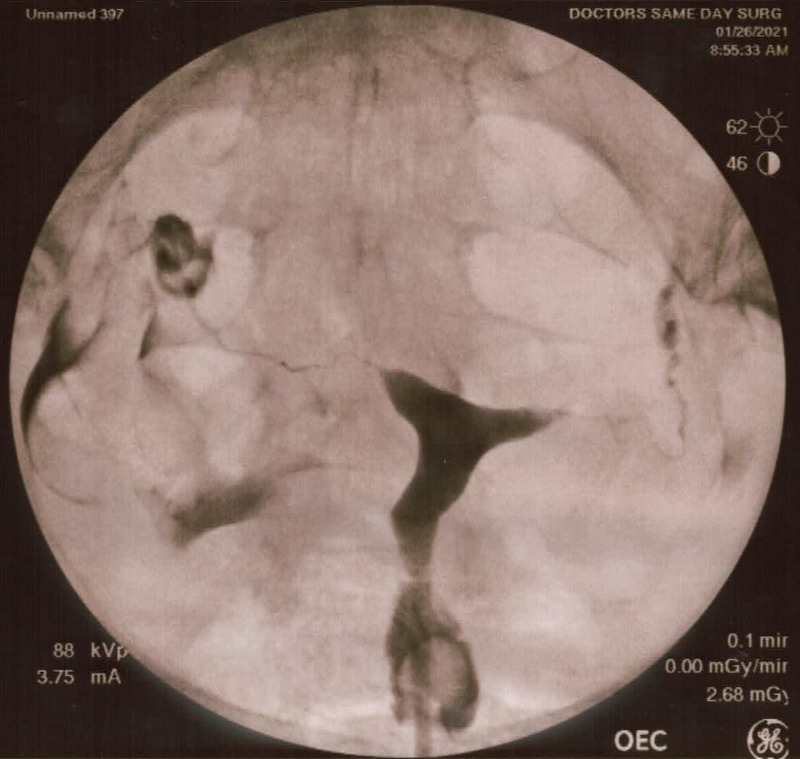
Hysterosalpingography
Hysterosalpingography: why Florida patients often need this test before fertility treatment

Hysterosalpingography is one of the most important diagnostic studies in fertility medicine because it reveals whether the fallopian tubes are open and whether the uterine cavity has structural conditions that may interfere with pregnancy. For many patients in Florida, this exam becomes a key step after months of unsuccessful conception, repeated miscarriage, or before starting advanced reproductive treatment. In many cases, what appears to be unexplained infertility is actually related to a tubal blockage or uterine abnormality that only becomes visible through this study. That is why centers such as Panama Fertility consider hysterosalpingography an essential part of early fertility evaluation.
What hysterosalpingography actually shows
This test uses contrast material and radiographic imaging to observe how the uterine cavity fills and whether the contrast passes normally through both fallopian tubes.
If the contrast moves freely into the abdominal cavity, tubal permeability is confirmed. If not, a blockage or narrowing may be present.
Why tubal evaluation matters before treatment
Even if ovulation is normal and hormone levels are stable, blocked tubes can prevent the egg and sperm from meeting naturally.
This means many patients may continue trying for months without understanding why pregnancy does not occur.
When Florida patients are usually advised to do hysterosalpingography
The test is commonly recommended after one year of trying to conceive, or earlier if age, pelvic infection history, endometriosis, or previous surgery suggest possible tubal damage.
Situations where earlier testing becomes important
Women over thirty five often benefit from earlier tubal assessment because reproductive timing becomes more sensitive.
At Panama Fertility, tubal evaluation is often requested early when treatment decisions depend on whether natural conception remains realistic.
What the procedure feels like
The study is brief and usually performed shortly after menstruation.
Is hysterosalpingography painful?
Most women describe mild to moderate cramping during contrast injection. The discomfort usually lasts only a few minutes.
Because the exam is short, many patients return to normal activities the same day.
Why hysterosalpingography changes fertility strategy quickly
If both tubes are open, less invasive treatment options such as ovulation induction or insemination may still be appropriate.
If tubal obstruction is present, IVF often becomes the most efficient path.
This is why one diagnostic test can immediately change the entire treatment plan.
Why some Florida patients compare fertility testing internationally
Some patients seek broader fertility evaluation outside the United States when they want complete reproductive interpretation combined with treatment planning.
Panama has become attractive because travel is manageable and fertility evaluation can be integrated efficiently.
Common mistakes before this exam
Scheduling the test at the wrong cycle phase or delaying it too long after infertility begins are common mistakes.
Another frequent error is assuming regular menstruation means tubes are functioning normally.
Symptoms can sometimes confuse diagnosis
Pelvic discomfort, cycle changes, or hormonal symptoms may be mistaken for sintomas del embarazo, when underlying tubal factors still remain undetected.
Frequently asked questions about hysterosalpingography
Usually fifteen to twenty minutes.
Sometimes contrast passage may clear minor tubal debris.
No, it is generally done without anesthesia.
Ideally yes, although one healthy tube can still allow pregnancy.
Look for experience, technology, transparency and patient support.
Yes, Panama is a well established destination for medical tourism.
For many Florida patients, hysterosalpingography becomes the diagnostic turning point that transforms uncertainty into a clear fertility direction.
ivf appointment
🌟 At Panamá Fertility, we offer tailored treatment plans for women with endometriosis, combining expertise, advanced technology, and compassionate care to help you achieve pregnancy.